The best boundary system is the one that works reliably on your actual property.
What does wire-free mean?
A wire-free mower uses mapped boundaries instead of a physical perimeter loop. Navigation may combine satellite positioning, correction data, cameras or LiDAR. The combination differs by model; “wire-free” describes the boundary approach, not a guarantee that every yard needs the same setup.
Where does RTK fit?
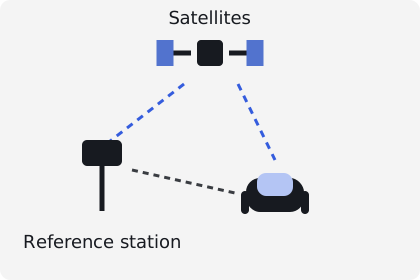
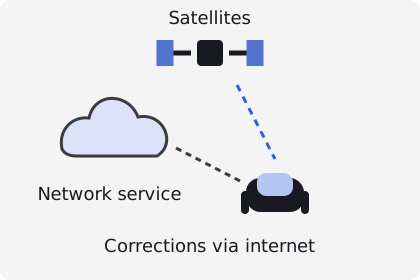
RTK refers to real-time kinematic positioning. It uses correction data to improve satellite-based location estimates. Depending on the mower, those corrections may come from a local reference station or a network service. Coverage, reception and connectivity should be checked for your specific property.
What about mature trees and buildings?
Dense canopy and structures can complicate satellite reception. Cameras and LiDAR can help selected systems navigate, but their role and limits vary. Some Husqvarna systems support a physical wire in difficult areas. Check the exact model, dock location and passages rather than assuming one feature resolves every obstruction.
When is boundary wire useful?
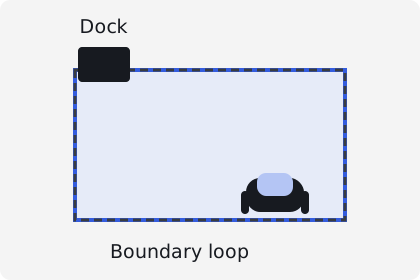
A perimeter wire defines the mowing area through a physical loop. It can be an option where the selected mower and site suit that approach. Consider installation work, future landscaping and how wire damage will be found and repaired. Keep a record of the layout.
What should an assessment decide?
Review sky visibility, usable routes, boundary slopes, drop-offs, dock access and desired zones. Match those observations to the mower’s instructions. For an Ohio yard with mature trees, the assessment should include the difficult corners and passages, not just the open middle of the lawn.
Sources & further reading
- Husqvarna installation requirements
- Husqvarna Support by Wire compatibility
- Mammotion navigation variants
Researched October 3, 2026. Confirm current model requirements before purchase.